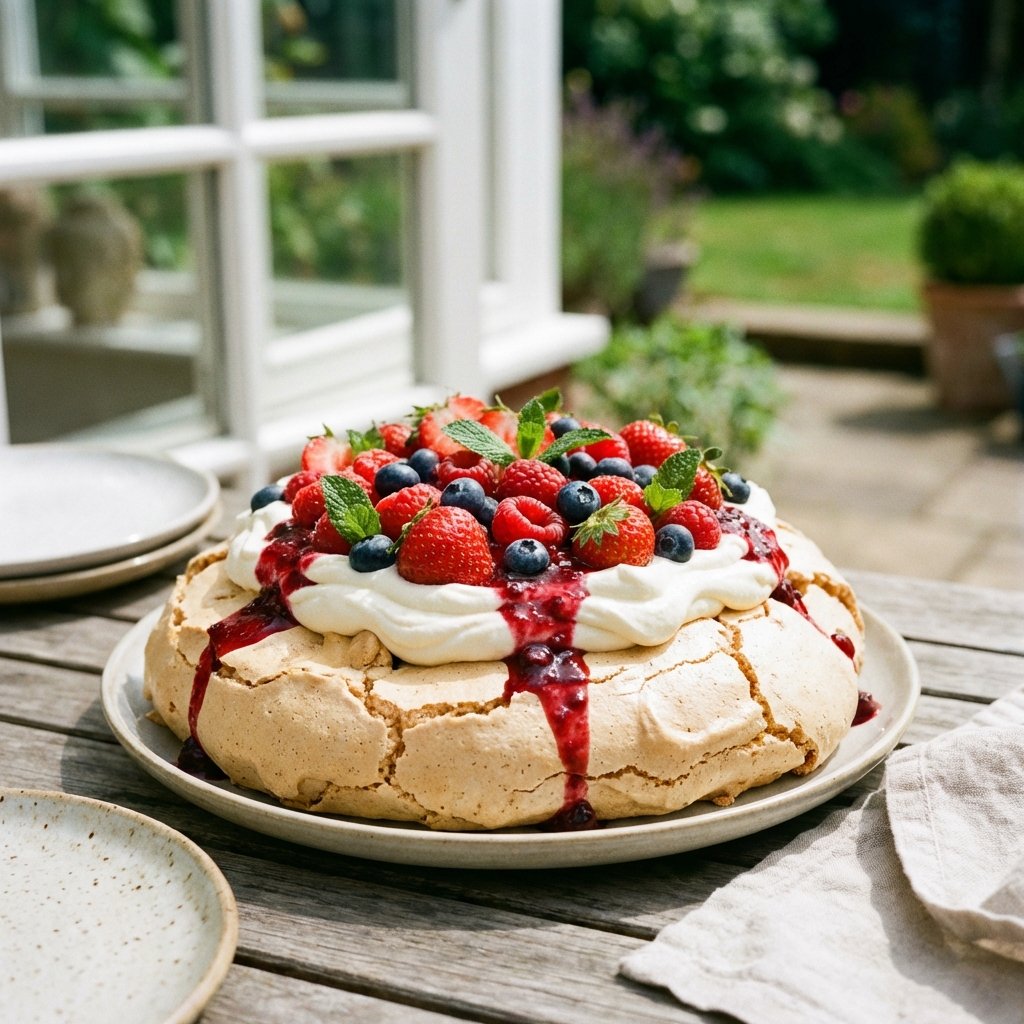
It is a cloud on a plate. Named after the Russian ballerina Anna Pavlova, this dessert is a study in texture: a crisp, shattering shell giving way to a marshmallow-soft center, topped with the cool richness of whipped cream and the tart freshness of seasonal fruit.
While often feared by home cooks, meringue is actually based on very simple scientific principles. Once you understand the "why" behind the steps—why we add vinegar, why we cool it continuously—you will never fear a collapsed pavlova again.
Chapter 1The Science of Meringue
Egg whites are mostly water and protein. When you whisk them, you are unravelling these proteins (denaturation) and trapping air bubbles inside their structure. Sugar stabilizes this foam by interacting with the water and preventing the proteins from bonding too tightly.
The Vinegar Trick
We add an acid (vinegar or cream of tartar) and cornstarch to the mixture. Why? The acid strengthens the protein network, stabilizing our foam. The cornstarch keeps the center soft and marshmallowy, distinguishing a Pavlova from a regular hard meringue.
Troubleshooting Common Issues
Weeping (Liquid oozing)
Cause: Sugar wasn't fully dissolved or the meringue was overcooked.
Fix: Rub the mixture between your fingers before baking to ensure it's not gritty.
Cracking
Cause: Cooling too quickly.
Fix: Leave the pavlova in the oven with the door ajar until completely cool. Sudden
temp changes shock the structure.
Flat / Spread Out
Cause: Egg whites weren't whisked to stiff peaks initially.
Fix: Ensure the bowl is perfectly clean. Even a trace of yolk or grease kills the foam
volume.
The Recipe
Ingredients
- 4 Large egg whites (room temperature)
- 220g Superfine (caster) sugar
- 1 tsp White vinegar
- 1 tsp Cornstarch
- 1/2 tsp Vanilla extract
- Topping: 300ml Heavy whipping cream, 1 tbsp powdered sugar, Mixed berries (strawberries, blueberries, raspberries)
Method
- Preheat: Set oven to 150°C (300°F). Line a baking sheet with parchment paper. Draw a 20cm circle on the back as a guide.
- Whip Whites: In a spotless bowl, whip egg whites on medium speed until soft peaks form.
- Add Sugar: Increase speed to high. Add sugar one tablespoon at a time, beating well after each addition. Continue beating until stiff, glossy peaks form (about 5-7 minutes). The mix should feel smooth, not gritty.
- Stabilize: Gently fold in the vinegar, cornstarch, and vanilla using a spatula. Do not knock out the air.
- Shape: Pile the meringue onto the circle guide. Use a palette knife to create furrows up the sides—this gives it structure and style. Make a slight dip in the center (a "nest") for the cream.
- Bake: Place in oven and immediately reduce temp to 120°C (250°F). Bake for 80-90 minutes. It should be pale and crisp, not browned.
- Cool: Turn the oven off. Crack the door slightly with a wooden spoon. Leave the pavlova inside to cool completely (at least 2 hours).
- Assemble: Just before serving, whip the cream and sugar to soft peaks. Pile onto the Pavlova. Top generously with fresh fruit.
Variations
While barriers are traditional, try these combinations:
- Tropical: Passionfruit pulp, cubed mango, and toasted coconut flakes.
- Black Forest: Cherry compote and chocolate shavings folded into the cream.
- Fig & Honey: Roasted figs, pistachios, and a drizzle of honey.