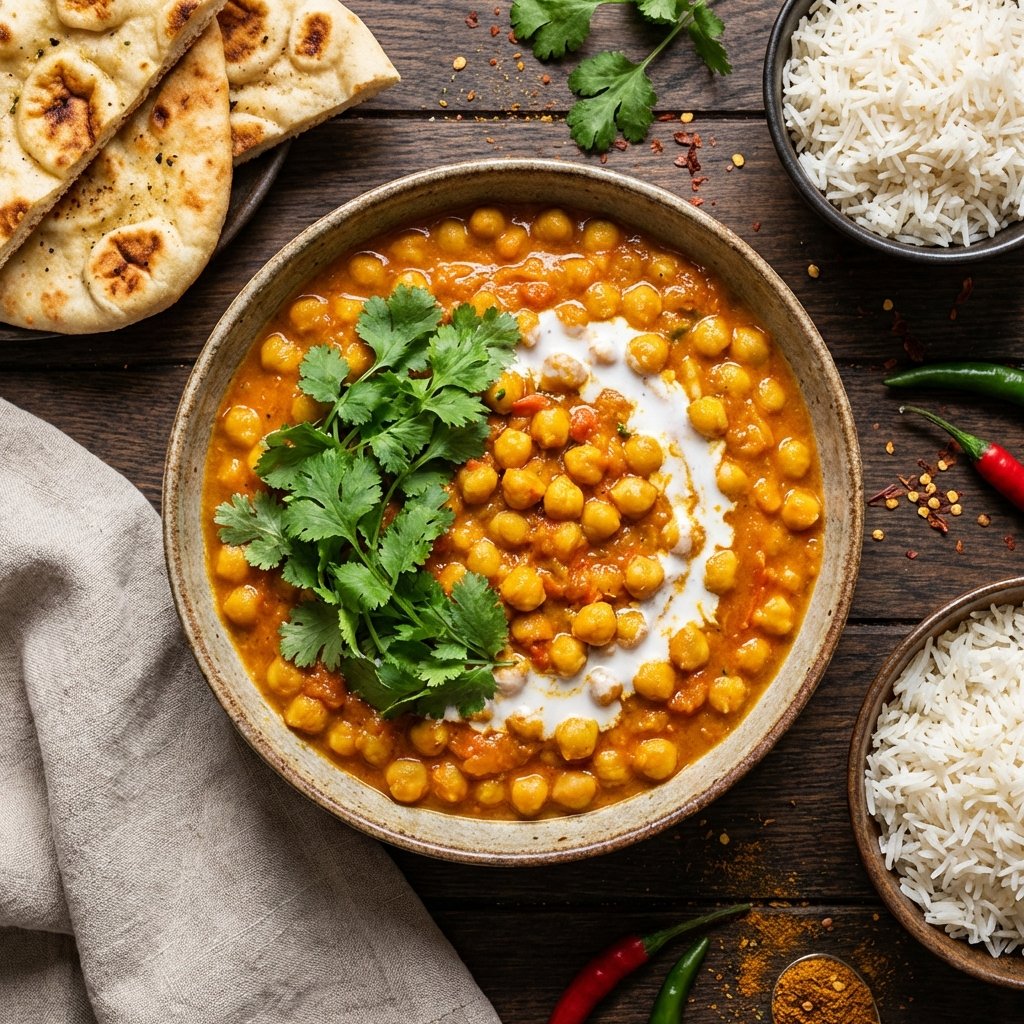
Curry is a word that contains multitudes. In the West, it is often reduced to a generic "curry powder" flavor. But in its origins across the Indian subcontinent, it is a nuanced layering of aromatics, toasted spices, acidic tomatoes, and creamy legumes.
This dish is inspired by Chana Masala, the iconic North Indian chickpea stew. It is comfort food that happens to be entirely plant-based. It is hearty enough for winter but bright enough for summer. And the secret, as always, lies in how you treat your spices.
Chapter 1The Alchemy of Spices (Tempering)
If there is one technique to master from Indian cooking, it is tadka (tempering). This is the process of blooming spices in hot fat (oil or ghee) to extract their essential oils.
Adding raw spices to a liquid stew results in a gritty, flat flavor. Toasting them in oil transforms them. The oil acts as a solvent, carrying the flavor compounds (like cuminaldehyde in cumin) deeper into the dish than water ever could.
Cumin Seeds
The earthy foundation. Must be added first to the hot oil to release their nutty aroma.
Turmeric
Provides the golden hue and a subtle bitterness. Anti-inflammatory powerhouse.
Coriander
Ground coriander seeds offer a citrusy, floral lift that balances the deeper spices.
Garam Masala
A "warming blend" of cinnamon, cloves, cardamom, and pepper. Added at the END to preserve its delicate volatiles.
The Base: Sofrito
While the spices are the stars, the stage is built on onions, ginger, and garlic. You must caramelize the onions deeply. Not just translucent—brown. Dark brown.
This bhuna stage (browning) provides sweet, Maillard-reaction savory notes that form the body of the curry. Without patience here, your curry will taste shallow and watery.
Chickpea Tip
If using canned chickpeas, save the liquid (aquafaba). It has dissolved starches that help thicken the curry naturally. If cooking from dry, add a pinch of baking soda to the soaking water to soften the skins perfectly.
The Recipe
Ingredients
- 2 tbsp Ghee or Coconut Oil
- 1 tsp Cumin seeds (whole)
- 2 large Onions, finely diced
- 1 tbsp Ginger-Garlic paste (fresh)
- 1-2 Green chilies, slit (optional)
- 1 tsp Ground Turmeric
- 1 tbsp Ground Coriander
- 1 tsp Kashmir Chili Powder (for color, mild heat)
- 2 cans (400g each) Chickpeas, rinsed
- 1 can (400g) Chopped Tomatoes
- 1 tsp Garam Masala
- 1 tsp Amchoor (Dried Mango Powder) or Lemon Juice
- Finish: Fresh cilantro (coriander leaves)
Method
- Bloom Spices: Heat the ghee in a heavy pot over medium heat. Add cumin seeds. Wait 30 seconds until they sizzle and darken slightly.
- The Bhuna: Add the onions and a pinch of salt. Cook patiently for 10-15 minutes, stirring often, until they are a deep, dark golden brown.
- Aromatics: Add ginger-garlic paste and green chilies. Cook for 2 minutes until the raw smell of garlic disappears.
- Powdered Spices: Lower heat. Add turmeric, coriander powder, and chili powder. Stir for 30 seconds. If it sticks, add a splash of water. Do not burn the spices!
- Deglaze: Add the tomatoes. Scrape the bottom of the pan. Cook until the oil separates from the tomato masala (another 8-10 minutes).
- Simmer: Add chickpeas and 1 cup of water. Bring to a boil, then reduce to a simmer. Cover and cook for 10 mins to let flavors meld. Mash some chickpeas against the side of the pot to thicken the gravy.
- Finish: Stir in Garam Masala and Amchoor (or lemon juice). Taste for salt. Garnish generously with cilantro.
How to Serve
This curry demands a vessel. Basmati rice is traditional—its fluffy, separate grains soak up the sauce without becoming mushy. Alternatively, a hot, charred Naan or Roti is perfect for scooping.
For a complete meal, serve with a side of cooling Raita (yogurt with cucumber and cumin) and some pickled red onions.