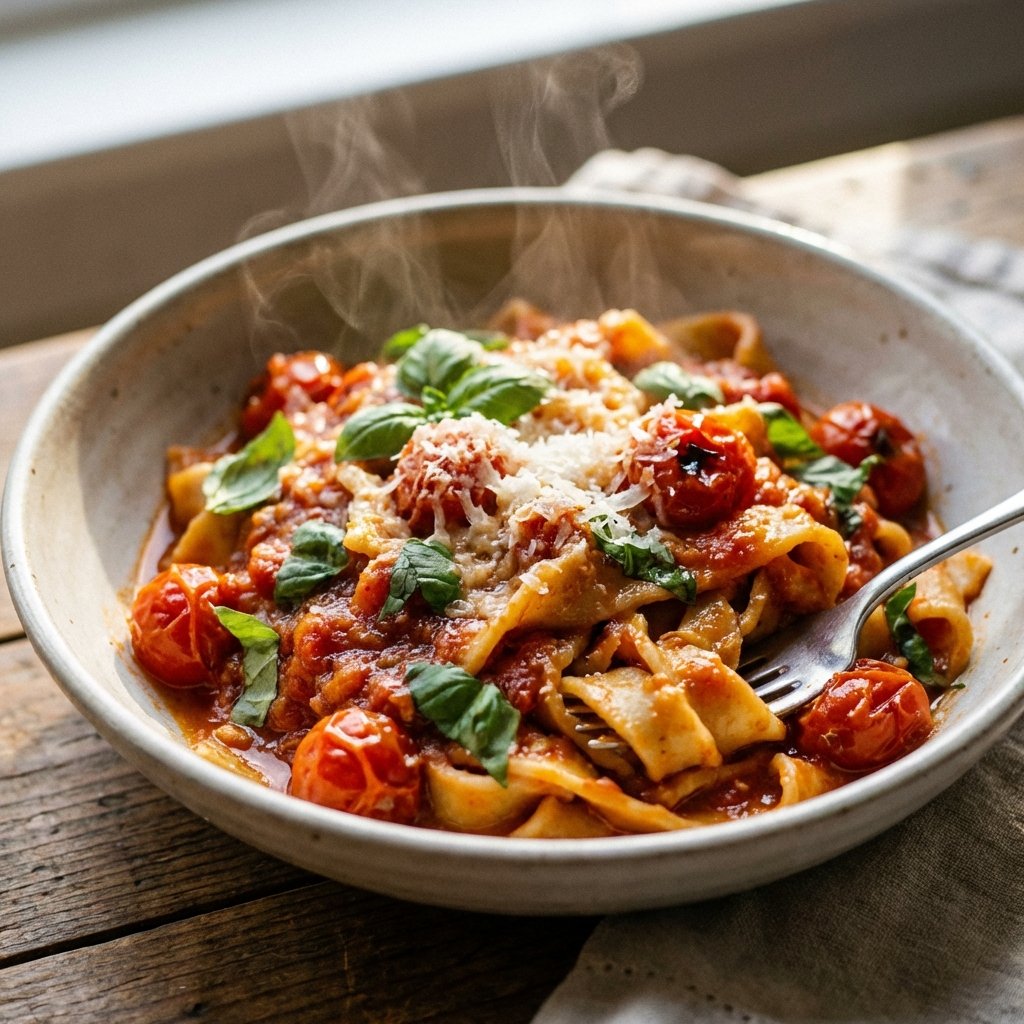
There is a profound beauty in the simplicity of pasta and tomatoes. It is a culinary marriage that has stood the test of time, traversing centuries and continents to land, steaming and fragrant, on our kitchen tables.
But to call this dish "simple" is perhaps a misnomer. While the ingredient list is short, the potential for depth, nuance, and pure gastronomic pleasure is infinite. This is not just a recipe; it is a study in balance, a lesson in respecting ingredients, and ultimately, a love letter to the rustic kitchens of Italy where food is life.
Chapter 1The History of the Humble Tomato in Italy
It is hard to imagine Italian cuisine without the tomato. The vibrant red sauce clinging to spaghetti strands seems as ancient as the Colosseum itself. Yet, the tomato is a relatively recent immigrant to the Italian peninsula. Arriving from the Americas in the 16th century, the pomodoro (golden apple) was initially viewed with deep suspicion, grown only as an ornamental plant and feared to be poisonous due to its membership in the nightshade family.
It wasn't until the late 17th and early 18th centuries that the brave souls of Naples began to incorporate tomatoes into their cooking. The volcanic soil of Mount Vesuvius proved to be the perfect cradle for this fruit, imparting a mineral-rich intensity that is still prized today in San Marzano tomatoes. From these humble, sun-drenched beginnings, the tomato sauce was born, evolving from a peasant staple to a global icon.
The Science of Flavor: Umami & Acidity
Why do we love tomato sauce so much? The answer lies in chemistry. Tomatoes are naturally rich in glutamates, the compounds responsible for the savory "umami" taste. When you cook tomatoes down, you concentrate these glutamates.
Furthermore, tomatoes possess a unique acidity. This acid cuts through the richness of olive oil and the starch of the pasta, creating a physiological "lift" on the palate that makes you want to take another bite. The addition of a pinch of sugar or a splash of cream (as we do in this recipe) isn't just about sweetness; it's about buffering that acidity to create a perfectly rounded flavor profile.
Choosing Your Weapons: The Ingredients
In a dish with so few components, there is nowhere to hide. Every ingredient must sing.
1. The Pasta
While fresh pasta is a treat, for this rustic sauce, dried pasta is arguably superior. Good quality dried pasta, extruded through bronze dies, has a rough surface texture that grabs onto the sauce. Look for pasta that looks "dusty" rather than shiny. Shapes like Spaghetti, Bucatini, or Rigatoni differ in how they deliver the sauce to your mouth. Rigatoni captures chunks of tomato inside, while spaghetti gets coated in the emulsified oils.
2. The Tomatoes
If it is mid-August and you have access to vine-ripened heirlooms that smell like the sun, use them. Blanch them, peel them, and crush them by hand. However, for the other 10 months of the year, a high-quality canned whole plum tomato is superior to a mealy fresh one. San Marzano DOP tomatoes are the gold standard—sweet, low-acid, and fleshy.
3. The Aromatics
Garlic connects the earthiness of the wheat to the brightness of the fruit. We slice it thinly rather than crushing it, allowing it to toast gently to a pale gold, infusing the oil with a nutty, sweet flavor rather than an aggressive bite. Basil should be added at the very end—its volatile oils are destroyed by high heat.
Chapter 3The Technique: Emulsification
The difference between "pasta with sauce on top" and "pasta separate from sauce" is emulsification. This is the alchemy of the Italian kitchen.
Pasta water is starchy, salty liquid gold. By adding a splash of this water to your oil and tomato mixture and tossing the pasta vigorously over heat, you create an emulsion. The oil and water bind together, thickened by the starch, to create a creamy, glossy coating that clings to every noodle. This is "mantecare"—the mounting of the sauce.
Chef's Tip: The "Al Dente" Rule
Always transfer your pasta to the sauce 2 minutes before it is fully cooked. It will finish cooking in the sauce, absorbing the tomato flavor directly into the starch matrix of the noodle. If the package says 10 minutes, drain at 8.
Rustic Tomato Pasta Recipe
Ingredients
- 400g Dried pasta (Spaghetti or Bucatini)
- 4 tbsp Extra virgin olive oil (plus more for finishing)
- 4 cloves Garlic, thinly sliced
- 1 tsp Red chili flakes (optional)
- 800g Whole peeled tomatoes (San Marzano preferred)
- Handful Fresh basil leaves
- 50g Pecorino Romano or Parmesan, freshly grated
- 1 tbsp Unsalted butter (optional, for silkiness)
- Scale Sea salt and freshly cracked black pepper
Method
- Prepare the Water: Bring a large pot of water to a rolling boil. Salt it generously—it should taste like the sea. This is your only chance to season the pasta itself.
- Infuse the Oil: In a large, wide skillet (cold), combine the olive oil, sliced garlic, and chili flakes. Turn the heat to medium-low. Let them heat up together. This "cold start" technique ensures the garlic infuses the oil perfectly without burning. removing from heat once the garlic is pale gold.
- Build the Sauce: Add the tomatoes (crush them by hand into the pan carefully to avoid splash-back). Season with a pinch of salt. Raise heat to medium and simmer for 10-15 minutes until the sauce thickens and the oil separates slightly from the tomatoes.
- Cook the Pasta: Drop your pasta into the boiling water. Set a timer for 2 minutes *less* than the package instructions.
- The Marriage: Reserve a cup of starchy pasta water. Drain the pasta and transfer it directly into the skillet with the sauce. Add a splash (about 1/4 cup) of pasta water.
- Mantecare: Turn the heat to high. Toss the pasta vigorously with tongs. The sauce will begin to emulsify and cling. If it looks dry, add more pasta water. Stir in the butter now if using.
- Finish: Turn off the heat. Stir in the cheese and torn basil leaves. The residual heat will melt the cheese into a creamy binding agent.
- Serve: Plate immediately in warm bowls. Drizzle with a thread of raw olive oil and extra cheese.
Pairing & Variations
This dish is a chameleon. Once you master the base technique, you can take it in infinite directions.
Wine Pairing
A tomato-based sauce with high acidity needs a wine that can match it. A Chianti Classico (Sangiovese grape) is the classic pairing. Its high acidity and cherry notes mirror the tomato perfectly. For a white option, a crisp Verdicchio or a rosé from Provence works beautifully to cut the richness.
Seasonal Twists
- Spring: Toss in fresh peas and mint at the very end.
- Summer: Use fresh cherry tomatoes, blistered until they pop, and finish with raw mozzarella.
- Autumn: Sauté mushrooms with the garlic for an earthier, woodsy take.
- Winter: Add chopped anchovies and olives for a punchy Puttaesca style.
Food is memory. This Rustic Tomato Pasta is not just dinner; it is a memory in the making. It is the smell of garlic toasting that brings the family to the table. It is the comfort of a warm bowl on a rainy Tuesday. It is deliciously, purposely, simple.